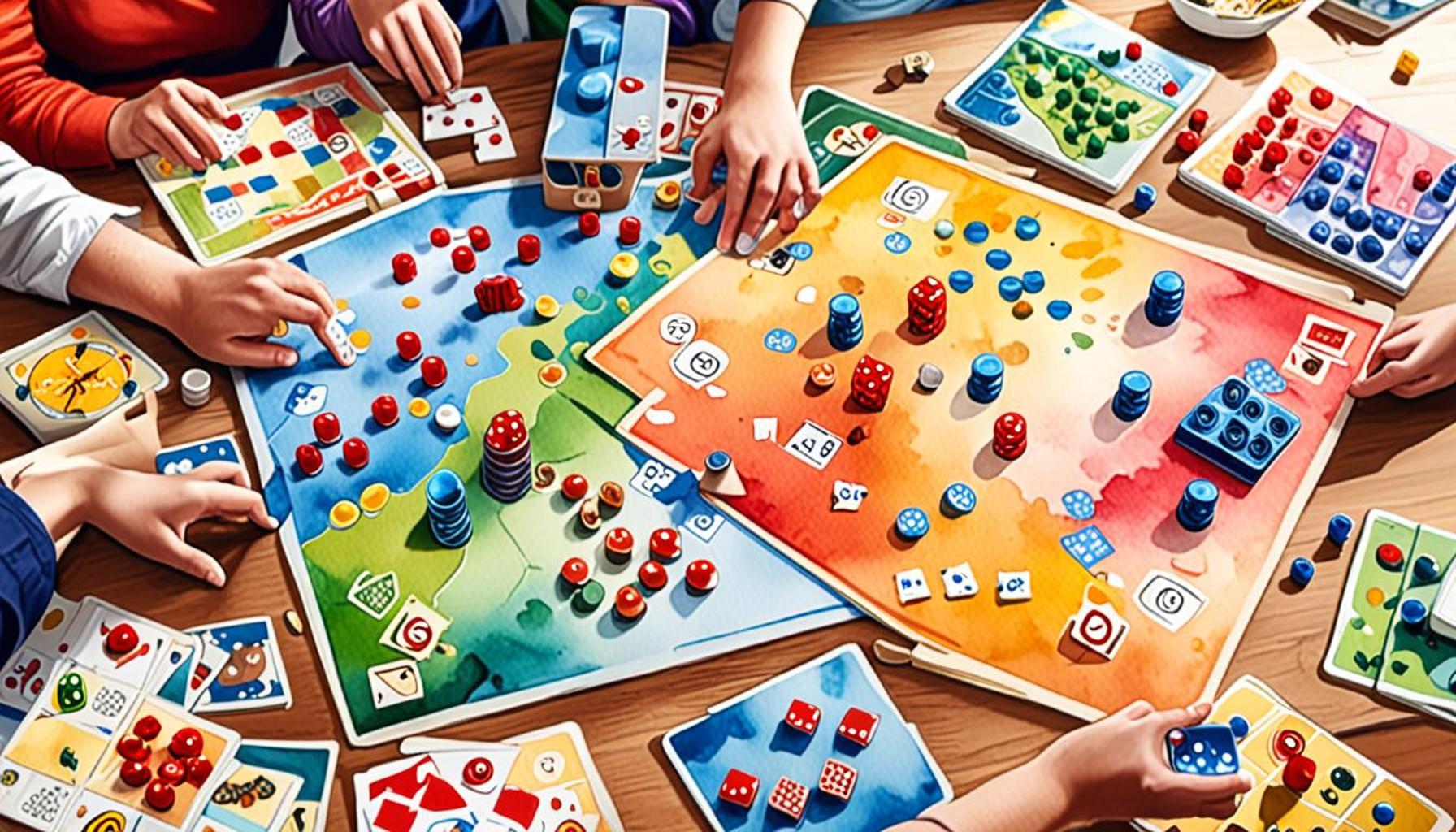
How Strategic Card Games Can Improve Critical Analysis and Decision Making

The Cognitive Benefits of Playing Strategic Card Games
Strategic card games are more than just entertainment; they serve as powerful tools for enhancing critical analysis and decision-making skills. Taking part in these games engages players in intellectual challenges that extend beyond the table. Whether you’re delving into classics like Poker and Bridge or exploring modern favorites such as Magic: The Gathering, you’ll discover that each of these games demands players to think several steps ahead, fostering a rich strategic environment.
- Problem-solving: One key aspect of strategic card games is the requirement for players to assess potential outcomes and make calculated risks. For instance, in Poker, you must decide whether to fold, call, or raise based on the strength of your hand and the betting patterns of your opponents. Such decisions cultivate a mindset equipped for real-life problem-solving, as players weigh risks versus rewards.
- Adaptability: Each game situation presents its own unique challenges, demanding a degree of flexibility in strategies and tactics. In a game like Magic: The Gathering, players must adjust their strategies on the fly, reacting to opponent moves and drawing new cards which can dramatically alter the dynamics of the game.
- Psychological Insight: Understanding opponents’ behaviors and tendencies can significantly improve decision-making. This psychological element is particularly pronounced in games such as Bridge, where partnership dynamics and reading your partner’s and opponents’ non-verbal cues can influence the outcome. Such insights are invaluable, helping players develop better emotional intelligence and social skills.
The blend of strategy and psychology in these games fosters a competitive environment that sharpens mental acuity. Studies suggest that players who regularly engage in strategic card games exhibit better analytical skills and heightened situational awareness. A report from the University of Southern California found that teenagers who played card games demonstrated higher cognitive function and improved mathematical skills compared to their peers who did not participate.
This improvement translates into real-world applications. For example, professionals in high-stakes environments—such as stock trading or contract negotiations—can greatly benefit from the analytical and strategic thinking honed through card games. With heightened cognitive abilities, individuals are likely to perform better in business decision-making and personal problem-solving scenarios.
As we delve deeper into the nuances of card games, it will become clear how they not only provide a form of recreation but also serve as a potent catalyst for developing crucial cognitive skills. Are you ready to discover how the next hand can change the way you think? Embracing these strategic challenges can open the door to not just a thrilling pastime, but significant personal growth and development.
DIVE DEEPER: Click here to learn more
Enhancing Cognitive Skills Through Gameplay
Strategic card games effectively serve as a microcosm of decision-making processes encountered in everyday life. The moments that players face challenges—deciding whether to risk their chips in Poker or choosing the best combination of cards to strengthen their position in Bridge—mirror the critical analysis needed in real-life situations. Each decision carries weight, requiring players to sift through information and consequences to reach the most advantageous outcome.
One aspect that makes strategic card games particularly conducive to developing critical analysis is the process of evaluating risk. Players learn to gauge their own strengths against those of their opponents, calculating odds and weighing probabilities. For instance, a player in Poker must constantly analyze not just their own hand, but also the possible hands of all other players involved in the game. This demand for constant evaluation fosters skills that translate into real-world scenarios, such as assessing job offers, negotiating contracts, or managing personal finances.
- Analytical Thinking: Every round introduces new variables that challenge players’ ability to think analytically. By analyzing each opponent’s behavior and gameplay style, players cultivate the capability to deconstruct complex situations into manageable parts, enhancing their reasoning skills.
- Strategic Planning: Anticipating opponents’ moves compels players to develop a plan that can withstand unexpected changes. In card games, as in business, predicting potential outcomes three or four moves ahead can be the key to success.
- Resource Management: Playing card games often involves the allocation of limited resources—whether it be cards in hand or chips on the table. Learning to manage these resources effectively builds financial literacy and the ability to prioritize tasks in both personal and professional contexts.
Various studies have illustrated the cognitive benefits of engaging with strategic card games. Research conducted at the University of Illinois revealed that individuals who participate in such games exhibit improved cognitive flexibility—a crucial aspect of critical thinking. These players are more proficient at shifting between diverse strategies when confronted with new information, a skill increasingly sought after in today’s fast-paced work environment.
Incorporating strategic card games into your routine does not simply entertain; it actively molds the way you approach problems. As we explore deeper aspects of these games, it becomes evident that the skills developed at the card table can yield significant dividends in your dynamic decision-making toolkit. Whether you’re a casual player or a seasoned competitor, the lessons learned in the realm of strategic play resonate long after the game ends, guiding you in everyday choices that matter.
Enhancing Skills Through Strategic Play
As players engage in strategic card games, they encounter various scenarios that require critical thinking and decision-making skills. Every move in these games requires players to assess risks, evaluate their opponents’ strategies, and formulate effective counter-strategies. These cognitive processes mirror real-life decision-making situations, providing players with a dynamic environment where they can learn to think on their feet.
Real-Time Strategy Evaluation
One fascinating aspect of strategic card games is the necessity for real-time evaluation of one’s decisions. Each choice made impacts subsequent moves, teaching players the importance of foresight and planning. Players often need to reconsider their initial strategies based on the evolving gameplay, thus honing their analytical skills. This aspect of play translates well to everyday scenarios, such as in the workplace, where quick, decisive thinking can significantly impact outcomes.
Enhanced Cognitive Flexibility
Moreover, engaging in these games can promote cognitive flexibility, enabling players to adapt their strategies in response to changing circumstances. This adaptability is crucial not only in gaming but also in professional environments where market conditions and organizational demands frequently shift. By regularly playing these games, learners can foster an agile mindset, making them better equipped to navigate uncertainties in various aspects of life.
Table: Benefits of Strategic Card Games
| Category | Description |
|---|---|
| Critical Analysis | Card games require players to analyze situations and the moves of opponents critically, enhancing their evaluative abilities. |
| Decision Making | The necessity to make quick decisions under uncertainty in game scenarios strengthens players’ ability to make informed choices in real life. |
As this table illustrates, engaging with strategic card games not only facilitates enjoyment but also cultivates essential cognitive skills that extend beyond the gaming table into everyday life and professional environments. Players can develop critical analytical prowess and sharpen their decision-making capabilities, illustrating the profound impact of these games.
EXPLORE MORE: Click here for effective memory retention strategies
Mastering Interpersonal Dynamics Through Gameplay
In addition to sharpening cognitive skills, strategic card games serve as a powerful platform for enhancing interpersonal dynamics that are critical in decision-making processes. Whether competing at a table in Las Vegas or engaging in a friendly match with family, these games inherently require players to read social cues and adapt their strategies accordingly. This creates a unique environment for developing communication skills and emotional intelligence.
One key component of this interpersonal aspect is social perception. As players engage in card games, they must pay close attention to the behaviors and body language of their opponents. Are they confident or hesitant? Do they exhibit signs of bluffing? By honing their ability to interpret non-verbal signals, players cultivate a keen sense of awareness that transcends the game itself. This is particularly beneficial in professional settings, where understanding colleagues’ or clients’ intentions can significantly impact negotiations and collaborations.
- Negotiation Skills: The act of bluffing in games like Poker is not merely a gamble; it’s a tactical negotiation. Players learn to engage in this delicate dance of deceit and persuasion, ultimately refining their ability to present arguments and counterarguments. This practice is invaluable in careers where negotiations are commonplace, from sales to law.
- Emotional Regulation: High-stakes situations often lead to intense emotions, but strategic card games teach players to manage both their emotions and those of others. Staying calm under pressure while reading rivals’ emotional states cultivates a level of composure essential for effective decision-making in stressful environments.
- Team Collaboration: Many card games require players to work in teams, enhancing team-building skills. In games like Spades or Bridge, success hinges on communication and strategy alignment with teammates. Learning how to collaborate effectively paves the way for successful teamwork in the workplace, where collective decision-making is increasingly vital.
The impact of strategic card games on interpersonal dynamics has not gone unnoticed within psychological research. A study published in the Journal of Personality and Social Psychology highlighted that participants who regularly engaged in strategic gameplay exhibited a higher level of empathy and understanding in social situations. This translates directly into improved critical analysis and decision-making as players become more adept at considering multiple perspectives and emotional contexts when facing choices.
Moreover, these interpersonal lessons learned through strategic card games can bolster one’s ability to navigate complex social environments. For example, a manager who adeptly understands the subtleties of team dynamics is better equipped to make decisions that foster a positive work atmosphere, ultimately leading to enhanced productivity and morale.
As players delve deeper into their strategic card play, they unlock not just the mechanics of game-winning tactics but the essential human skills necessary for resolution and cooperation in real-world scenarios. Thus, engaging with card games can transform the way individuals approach decision-making, making it not only a matter of logic but also a blend of emotional awareness and social intelligence.
DISCOVER MORE: Click here to learn about the impact of mind games on child development
Empowering Decision-Making Through Card Games
In conclusion, the exploration of how strategic card games can enhance critical analysis and decision-making reveals a multifaceted approach to cognitive and interpersonal skill development. Players benefit from heightened cognitive skills, adaptability in complex scenarios, and improved social dynamics. The nuances of gameplay foster an environment where individuals not only engage in strategy but also learn the art of negotiation, emotional regulation, and effective teamwork.
The integration of these skills into daily life is profound. As players analyze opponents’ strategies and adapt their own in real-time, they cultivate a mindset that is invaluable in professional and personal settings alike. The ability to perceive subtle social cues and navigate through complex emotional landscapes translates directly to real-world situations, enabling better decision-making in high-pressure environments.
Furthermore, ongoing research supports the notion that such cognitive and emotional development extends beyond the gaming table, enriching interpersonal relationships and enhancing workplace interactions. As individuals continue to hone these skills through card games, they become not just better players but also more strategic thinkers, better collaborators, and ultimately, more effective decision-makers.
Thus, strategic card games serve as more than a source of entertainment; they are a dynamic training ground for essential skills that empower individuals to navigate challenges with clarity and confidence. For those seeking to improve their critical analysis and decision-making capabilities, embracing the world of card games offers an engaging pathway to personal and professional growth.