The Role of Guessing Games in Improving Cognitive Flexibility in Children

Cognitive Development through Play
Engaging in guessing games offers children more than just entertainment; it serves as a powerful tool for enhancing their cognitive abilities. These games, which often require players to use limited information to make informed guesses, stimulate critical thinking and adaptability in young minds. As children guess, deduce, and strategize, they foster essential psychological skills that will serve them throughout their lives.
Research highlights that cognitive flexibility plays a crucial role in a child’s development. This flexibility allows children to navigate different scenarios and adjust their thought processes based on the given information. It is instrumental in multiple dimensions of growth, including:
- Problem Solving: Children sharpen their ability to tackle issues from various perspectives. For instance, when playing “20 Questions,” a child might consider not only the physical attributes of an object but also its uses and associations.
- Social Interactions: Children improve their ability to adjust their communication styles based on social cues, such as tone and body language, which are critical when they need to convey their thoughts or ask clarifying questions during the game.
- Academic Success: The skills developed during these games, such as analytical thinking and quick reasoning, often translate to better grades and performance in school settings, making learning more effective and enjoyable.
Guessing games like “Guess Who?” and “Guess the Animal” require participants to analyze different possibilities and draw logical conclusions from incomplete information. These engaging activities encourage children to cultivate a suite of vital skills:
- Decision-Making: They must quickly assess the available options and make thoughtful choices while weighing potential outcomes.
- Memory Recall: Remembering clues or attributes shared by fellow players is essential for successful guessing, assisting in the development of short-term memory.
- Creativity: Often, thinking outside the box is necessary to arrive at the correct answer, fostering innovative thinking that is crucial in problem-solving tasks.
Understanding the significance of such games can motivate parents and educators to integrate them more into daily life. The advantages of strengthening cognitive flexibility in children extend beyond mere playtime; they equip children with the resilience and adaptability required to navigate the complexities of everyday life.
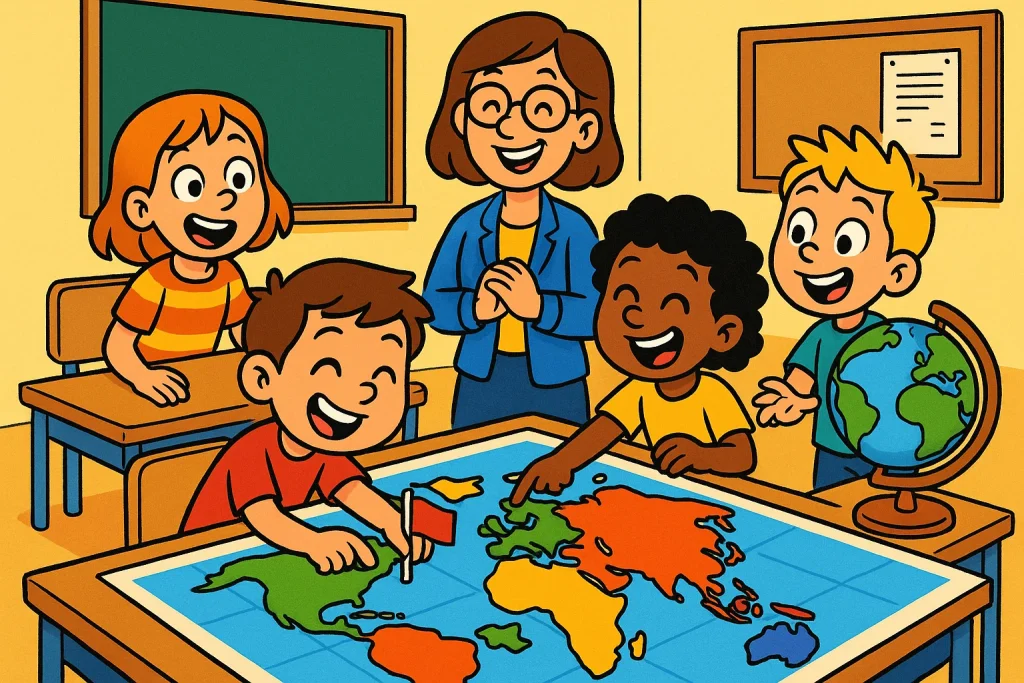
By incorporating guessing games into family activities, parents can turn ordinary moments into opportunities for intellectual growth. For example, suggesting a game of “20 Questions” during a road trip can keep children engaged while also enhancing their cognitive development. In the classroom, educators might use similar games to break the ice and create an interactive learning environment. These simple yet impactful strategies highlight how playful learning experiences can lay the groundwork for a lifetime of critical thinking and adaptability.
DIVE DEEPER: Click here to discover how puzzles enhance your mind!
Unpacking the Mechanics of Guessing Games
Guessing games engage children’s minds in unique ways, making them ripe for cognitive development. At their core, these games challenge children to think critically and creatively, honing their ability to adapt to new information and situations. This adaptability, known as cognitive flexibility, is a cornerstone of effective problem-solving and decision-making. When children participate in guessing games, they navigate a variety of scenarios that require them to shift their approach rapidly based on feedback from their peers and the evolving context of the game.
The mechanics of these games often involve asking questions, analyzing answers, and making educated guesses. For instance, a child playing “Guess Who?” must deduce the identity of a character by asking yes-or-no questions. This encourages them to formulate a series of increasingly strategic inquiries, developing their ability to assess which clues are most relevant to their goal. In this process, children learn to:
- Process Information: As players receive responses from other participants, they must sort through this information to form hypotheses and make inferences.
- Handle Uncertainty: Guessing games inherently involve an element of unpredictability. Children must be comfortable with not having all the answers, fostering resilience in the face of ambiguity.
- Collaborate Effectively: Many guessing games require teamwork, prompting children to share information and work together to reach conclusions. This collaboration helps them develop social skills essential for navigating real-world situations.
Moreover, the benefits extend well beyond simple entertainment. The development of cognitive flexibility through guessing games equips children with vital life skills. For example, adapting their strategies based on others’ responses can translate into improved adaptability in schoolwork and social interactions. Children who practice these skills in a game setting are more likely to apply similar thought processes when faced with challenges in daily life.
Integrating guessing games into children’s routines can also ignite a passion for learning. Parents and educators might consider breaking away from traditional educational methods by introducing games like “Guess the Animal,” which involves descriptive clues related to various animals. This approach not only encourages curiosity but also enhances language skills as children articulate their thoughts and questions. The blend of fun and learning allows for a more holistic approach to cognitive development—an experience that melds joy with intellectual growth.
In the fast-paced world of technology and information overload, fostering cognitive flexibility in young minds is more crucial than ever. Guessing games stand out as an engaging medium through which children can practice and refine these essential skills, laid down in a playful yet impactful context. The foundation for lifelong learning, creativity, and adaptability can very well begin with these simple, enjoyable activities—transforming play into profound educational opportunities.
| Advantages | Key Characteristics |
|---|---|
| Enhances Problem-Solving Skills | Children learn to think critically and explore various solutions. |
| Boosts Creativity | Guessing games encourage out-of-the-box thinking and imaginative play. |
Guessing games offer unique opportunities for children to engage their minds in ways that promote cognitive flexibility. These games not only entertain but also challenge kids to adapt their thought processes. When children participate in guessing games, they must use clues to determine outcomes, which requires an ability to integrate information, modify strategies, and explore alternative possibilities. This mental agility is essential for effective problem-solving.Moreover, by incorporating elements of surprise and unpredictability, guessing games can significantly enhance children’s creativity. The expectation of varied responses to their guesses encourages them to think beyond conventional limits, fostering a mindset open to novel ideas. As educators and parents observe these developments, they can further tailor activities that nurture such cognitive skills. Engaging children in these interactive games can thus be a pivotal strategy in their overall intellectual growth and adaptability.
DISCOVER MORE: Click here to learn how puzzles can sharpen your mind
Exploring Various Forms of Guessing Games
In the realm of cognitive development, the variety of guessing games available is as diverse as children’s interests themselves. Each type of game contributes uniquely to fostering cognitive flexibility. Traditional games, digital platforms, and innovative classroom strategies all serve to spark children’s imaginations while also enhancing their decision-making skills.
Consider the classic outdoor game of “20 Questions.” This game requires players to think abstractly as they must guess a specific object, person, or place within a limited number of inquiries. This structure hones their ability to frame questions that narrow down possibilities effectively. As children engage in this interactive guessing session, they learn not only the art of questioning but also the concept of elimination. Children in the United States often gather in groups to enjoy this simple yet profound game on family picnics or during school recess, unknowingly practicing vital skills tied to cognitive flexibility.
On the digital front, numerous interactive applications and online games now incorporate guessing elements that cater specifically to children’s developmental needs. For instance, educational apps like “Heads Up!” allow children to engage with virtual characters through guessing. These platforms offer immediate feedback on their guesses, fostering a dynamic learning environment that encourages adaptability and quick assessment of information. Furthermore, technology-driven guessing games often incorporate diverse topics—from history to biology—which can expand students’ knowledge horizons, while also sharpening their ability to pivot between different subjects seamlessly.
In the classroom setting, educators can weave guessing games into lessons, promoting an active learning experience. Activities such as “Guess the Word,” where children provide synonyms or antonyms to identify a vocabulary word, tap into language skills while reinforcing cognitive agility. Such classroom innovations emphasize crucial thinking skills essential for academic success, showcasing that learning need not be a monotonous affair but rather a lively exchange of ideas.
- Stimulate Critical Thinking: Whether through board games or interactive apps, children are encouraged to think beyond the obvious, fostering a more nuanced thought process that stands to benefit their academic journey.
- Encourage Risk-Taking: Guessing games create a safe environment for children to make mistakes and learn from them, instilling a sense of resilience—a vital quality needed in fast-evolving educational landscapes.
- Foster Cultural Awareness: Guessing games that involve guessing movie quotes or popular music lyrics can lead to discussions about cultural references and trends, broadening children’s horizons in a socially relevant context.
Additionally, incorporating family-oriented guessing games during game nights can further enhance children’s cognitive abilities while strengthening familial bonds. Games like charades or Pictionary allow parents and children to work collaboratively towards a common goal, promoting shared understanding and communication—skills invaluable as children grow into adulthood. In this framework, guessing games become a powerful tool not only for cognitive development but also for nurturing interpersonal relationships within families.
The multifaceted nature of guessing games presents an exciting opportunity for fostering cognitive flexibility in children. By exposing them to varied forms—digital, physical, and collaborative—parents and educators can ensure that children are equipped with the ability to adapt their thinking and problem-solving approaches as they daringly navigate a world full of uncertainties.
DIVE DEEPER: Click here to uncover the evolution of brain teasers
Conclusion
In summary, guessing games serve as a vital component in enhancing cognitive flexibility among children, offering a blend of fun and educational value. These games not only stimulate critical thinking and creativity, but they also enable children to adapt their reasoning skills to various contexts. Through engaging interactions—whether in the backyard playing “20 Questions,” exploring digital platforms like “Heads Up!,” or participating in classroom activities—children continuously challenge their mental processes.
The structured uncertainty present in guessing games cultivates an environment where risk-taking is encouraged, paving the way for resilience as children learn to embrace mistakes. Moreover, as they engage with culturally relevant content, children expand their social awareness and develop essential communication skills—qualities that will serve them throughout their academic and social lives.
As parents and educators implement diverse guessing games into daily routines, they can rest assured that they are equipping the next generation with the adaptability needed to thrive in an ever-changing world. By recognizing the value of these playful endeavors, stakeholders can contribute to children’s holistic development, making learning an exciting adventure rather than a chore. Thus, the integration of guessing games into both home and educational settings opens the doors to a myriad of cognitive possibilities, allowing children to flourish in their journey to becoming innovative thinkers.