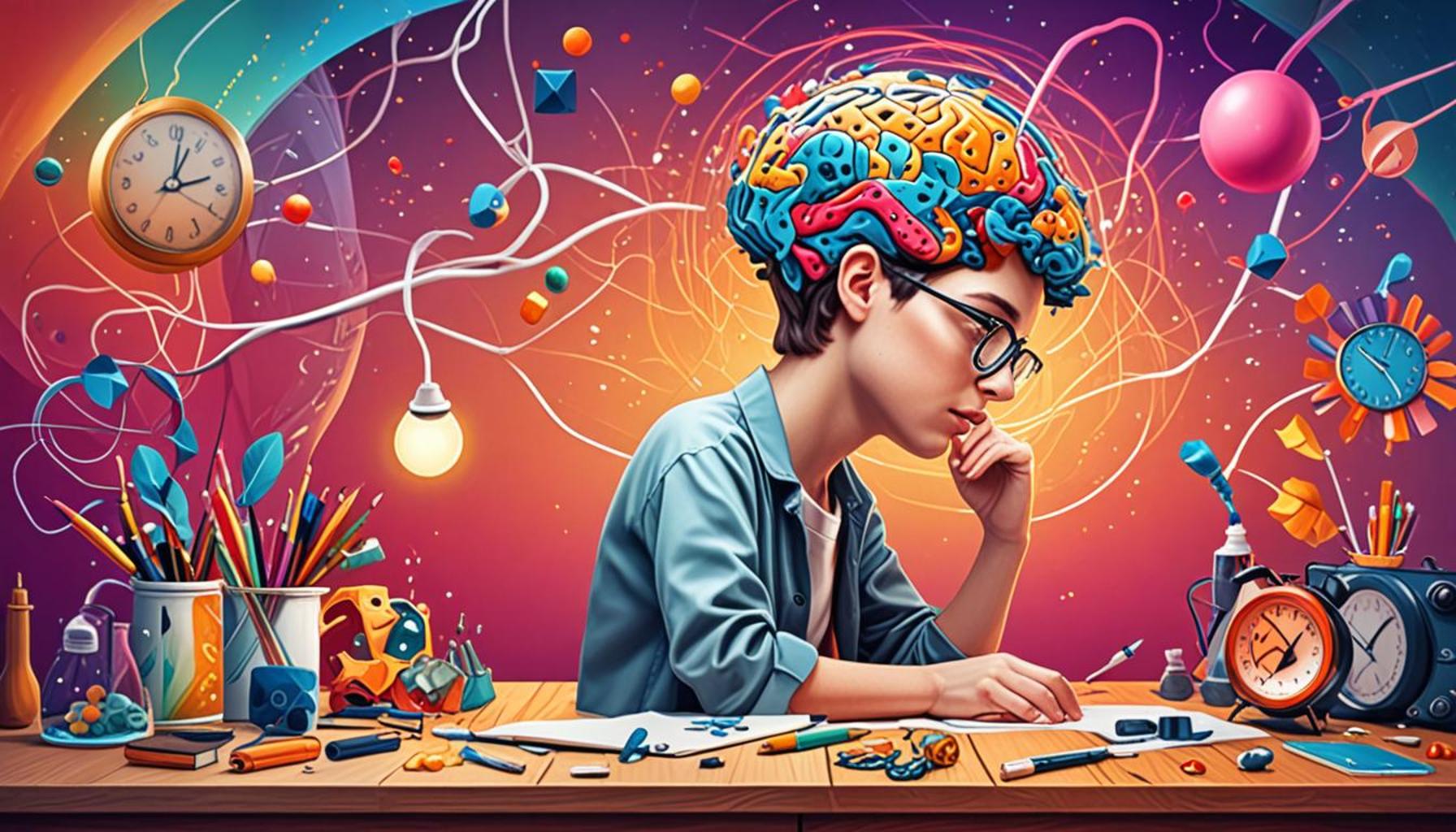
Logic Challenges: How They Stimulate Creativity and Problem Solving

Unlocking Potential through Logic Challenges
Logic challenges are more than just puzzles; they are gateways to enhancing cognitive abilities. Engaging with these thought-provoking tasks can significantly improve both creativity and problem-solving skills. By diving into a variety of logic problems, individuals can sharpen their thinking processes and discover innovative solutions that may not be readily apparent in everyday life.
Consider the wide-ranging benefits of immersing oneself in logic challenges:
- Enhancing Analytical Thinking: Logic puzzles require careful consideration of available information. Engaging with problems demands a systematic approach, where the solver must evaluate options, draw inferences, and make justified conclusions. For instance, a chess scenario requires players to anticipate their opponent’s moves, while simultaneously designing their own strategy.
- Boosting Creativity: Out-of-the-box thinking is essential to find unique solutions. Logic challenges often come with constraints that necessitate innovative approaches to overcome them. For example, in lateral thinking puzzles, participants are prompted to think creatively to devise unexpected explanations or solutions, making the exercise both fun and mentally stimulating.
- Improving Focus: These challenges demand concentration, helping to refine attention spans. Engaging with complex puzzles cultivates the skill of maintaining focus over extended periods, which is invaluable in our increasingly distracted society. Students and professionals alike benefit from improved focus when navigating tasks that require sustained mental effort.
Popular formats such as Sudoku, brain teasers, and riddles serve as excellent tools for practicing logical reasoning. Sudoku, for instance, not only entertains but also engages various cognitive functions, such as memory and pattern recognition. Riddles, on the other hand, compel solvers to interpret language cleverly and think beyond literal meanings, enhancing verbal reasoning skills.
Moreover, logic challenges contribute to personal and professional growth. Individuals who routinely tackle these tasks are more adept in environments that require critical thinking and rapid decision-making. For example, in sectors like technology or finance, where analytical skills are critical, employees who engage in logical puzzles are often better equipped to handle complex issues and devise strategic solutions. Thus, making logic challenges a vital component for success in the fast-paced and competitive landscapes of today.
As we delve deeper into the world of logic challenges, you’ll discover how these engaging puzzles unlock your potential, transforming challenges into opportunities for growth and innovation. Whether through simple games or advanced problem-solving tasks, there is a rich landscape of logic challenges waiting to be explored and mastered.
DISCOVER: Click here to enhance your cognitive skills
The Cognitive Mechanics Behind Logic Challenges
As logic challenges become more popular in educational and recreational settings, their true potential in cultivating creativity and enhancing problem-solving abilities is increasingly evident. The methodology behind engaging with these challenges delves deep into cognitive processes that facilitate innovative thinking and precise decision-making. By tackling these enigmas, individuals not only enjoy a fun pastime but also engage in profound mental workouts that can yield surprising outcomes.
One significant aspect of logic challenges is their ability to foster a mindset that prioritizes curiosity and exploration. When faced with a complex puzzle, participants often find themselves compelled to ask questions that lead to deeper understanding. Consider logic grids, where solvers must determine relationships among various elements using deductive reasoning. This exercise encourages players to explore solutions from multiple angles and recognize patterns that may otherwise remain obscured. Such exploration lays the groundwork for creative problem solving, as novel solutions often arise from untraditional thought paths.
Additionally, engaging with different types of logic challenges can fine-tune various critical thinking skills. The following list highlights some of the key cognitive benefits acquired through consistent practice:
- Developing Pattern Recognition: Many logic challenges require the ability to identify underlying patterns. For example, in sequence puzzles, solvers must discern the connections among numbers or symbols to arrive at the correct answer. This skill can benefit areas such as data analysis and programming.
- Encouraging Resilience: Logic challenges often involve trial and error. Participants learn that persistence is crucial, as repeated attempts can lead to breakthroughs. This gritty determination is a valuable asset in both personal and professional spheres, fostering a never-give-up attitude.
- Facilitating Collaborative Problem Solving: When presented as a group activity, logic challenges promote teamwork. Collaborative approaches require individuals to combine their varied thought processes, generating a pool of ideas that can lead to enhanced creativity and robust solutions.
Moreover, logic challenges have been embraced by educational institutions as effective tools for teaching critical thinking skills. Schools across the United States are incorporating activities such as escape rooms, logic riddles, and math competitions into their curricula to stimulate student engagement and creativity. This shift reflects a recognition that traditional education may not always foster the necessary skills for innovative thinking in a rapidly evolving world. By providing structured yet flexible problem-solving scenarios, logic challenges prepare learners for real-world scenarios that require agility in thought and action.
The world of logic challenges is diverse, containing a multitude of formats that cater to varying interests and skill levels. Their incorporation into daily routines—whether through mobile app puzzles or casual board games—offers exciting ways to exercise the brain while promoting creativity and enhancing problem-solving capabilities. As enthusiasts continue to explore these stimulating activities, they simultaneously unlock new dimensions of their intellectual potential.
| Category | Description |
|---|---|
| Enhances Analytical Thinking | Engaging in logic challenges develops critical thinking skills that are essential for evaluating arguments and solving complex problems. |
| Boosts Creativity | Logic puzzles often require out-of-the-box thinking, inspiring individuals to generate innovative solutions and approaches to various challenges. |
Engaging in logic challenges can remarkably enhance one’s mental agility. Individuals frequently find themselves navigating through intricate scenarios that demand sharp reasoning and deductive skills. This kind of engagement not only sharpens the mind but also lays the groundwork for everyday decision-making processes. Moreover, the intersection of creativity and logic in these challenges presents an intriguing dynamic. As participants encounter increasingly complex puzzles, they learn to view problems from diverse perspectives, cultivating a mindset rich in innovation. This blend of analytical and imaginative thinking fosters a comprehensive approach to problem-solving that extends beyond traditional methods.Through consistent engagement with logic challenges, participants are likely to experience significant growth in their cognitive abilities. This can lead to enhanced performance in academic and professional settings, fueling a continuous cycle of improvement. Logic challenges not only stimulate creativity but also cultivate essential problem-solving skills that resonate throughout various aspects of life, making them a valuable tool for personal and professional growth.
DISCOVER MORE: Click here to learn about group dynamics in puzzle-solving
The Real-World Applications of Logic Challenges
Beyond their recreational appeal, logic challenges have a profound impact across various real-world domains. From corporate training to tech innovation, these brain-teasers are transforming how individuals and teams approach problem-solving and creativity. As businesses strive to foster a competitive edge, understanding the practical applications of logic challenges is vital.
For instance, many technology firms are now integrating logic challenges into their hiring processes. Companies like Google and Microsoft utilize puzzles and analytical tasks to assess candidates’ critical thinking capabilities. The rationale is simple: the ability to navigate complexities often leads to innovative solutions in real business challenges. In this way, prospective employees demonstrate not only their cognitive skillsets but also their adaptability—a trait increasingly sought after in a fast-paced environment.
Furthermore, organizations have begun to recognize the value of logic challenges in team-building exercises. When groups confront intricate puzzles together, they learn to communicate more effectively, pooling their diverse perspectives to devise comprehensive solutions. This collaborative problem-solving often leads to fresh ideas that can drive projects forward more effectively than traditional brainstorming sessions. Workshops that focus on logic challenges break down hierarchies, allowing everyone from junior staff to executives to contribute equally, sparking creativity at all levels.
Educational institutions also capitalize on the benefits of logic challenges to prepare students for various career paths. Practical applications can be found in STEM (Science, Technology, Engineering, Math) education, where logic puzzles reinforce mathematical concepts and scientific reasoning. Schools and universities are increasingly incorporating competitive mathematical challenges and team-based escape room scenarios into their programs. These activities enable students to experience hands-on learning, making abstract concepts tangible while promoting critical thinking.
The rise of online platforms offering logic challenges presents further opportunities for personal and professional development. Websites and apps designed for puzzle enthusiasts often feature leaderboards and timed challenges, creating a sense of community among solvers. This technological integration not only gamifies the learning experience but also pushes users to improve their logical reasoning skills continually. As cooperatives and communities of practice form around these platforms, individuals find motivation not just in solving the puzzles but in sharing strategies and insights that enhance collective creativity.
Moreover, the benefits of logic challenges extend to mental health. Engaging with puzzles has been shown to boost cognitive functions and improve emotional resilience, helping individuals manage stress more effectively. In this context, puzzles can serve as a form of therapy, providing a constructive outlet for one’s cognitive energy while also fostering a sense of accomplishment and self-efficacy.
As the demand for innovative thinkers and problem solvers continues to rise, logic challenges stand out as effective tools for honing essential skills. Whether through individual practice or collaborative initiatives, the adaptability of these cognitive exercises ensures their relevancy in cultivating a mindset geared toward creativity and problem-solving in an ever-changing landscape.
DISCOVER MORE: Click here to enhance your memory skills
Conclusion
In an era where creativity and innovation are paramount, logic challenges emerge as compelling catalysts for enhancing problem-solving abilities. By integrating these puzzles into various facets of life—be it in corporate settings, educational institutions, or personal development—individuals unlock a reservoir of cognitive resources that enhances critical thinking and collaborative skills. As we have explored, businesses are increasingly recognizing the value of logic challenges not only in optimizing recruitment processes but also in fostering dynamic teamwork and creative solutions.
Educational frameworks that embrace logic challenges prepare students not just academically but also equip them with the necessary skills to tackle the complexities of a modern workforce. The shift toward online platforms allows people from diverse backgrounds to engage with these challenges, creating communities that thrive on shared knowledge and strategies. Investing time in logic challenges can also yield mental health benefits, promoting cognitive agility while providing an outlet for stress relief.
As we move forward in a world that demands continuous innovation, the implications of engaging with logic challenges are profound. They not only spur personal growth but can also transform entire organizations by cultivating a culture of creativity, adaptability, and resilience. The call to action is clear: embrace logic challenges as essential tools for stimulating creativity and enhancing problem-solving skills, and watch as new solutions emerge in ways previously unimagined. Exploring this intriguing intersection of logic and creativity may just be the key to thriving in an ever-evolving landscape.