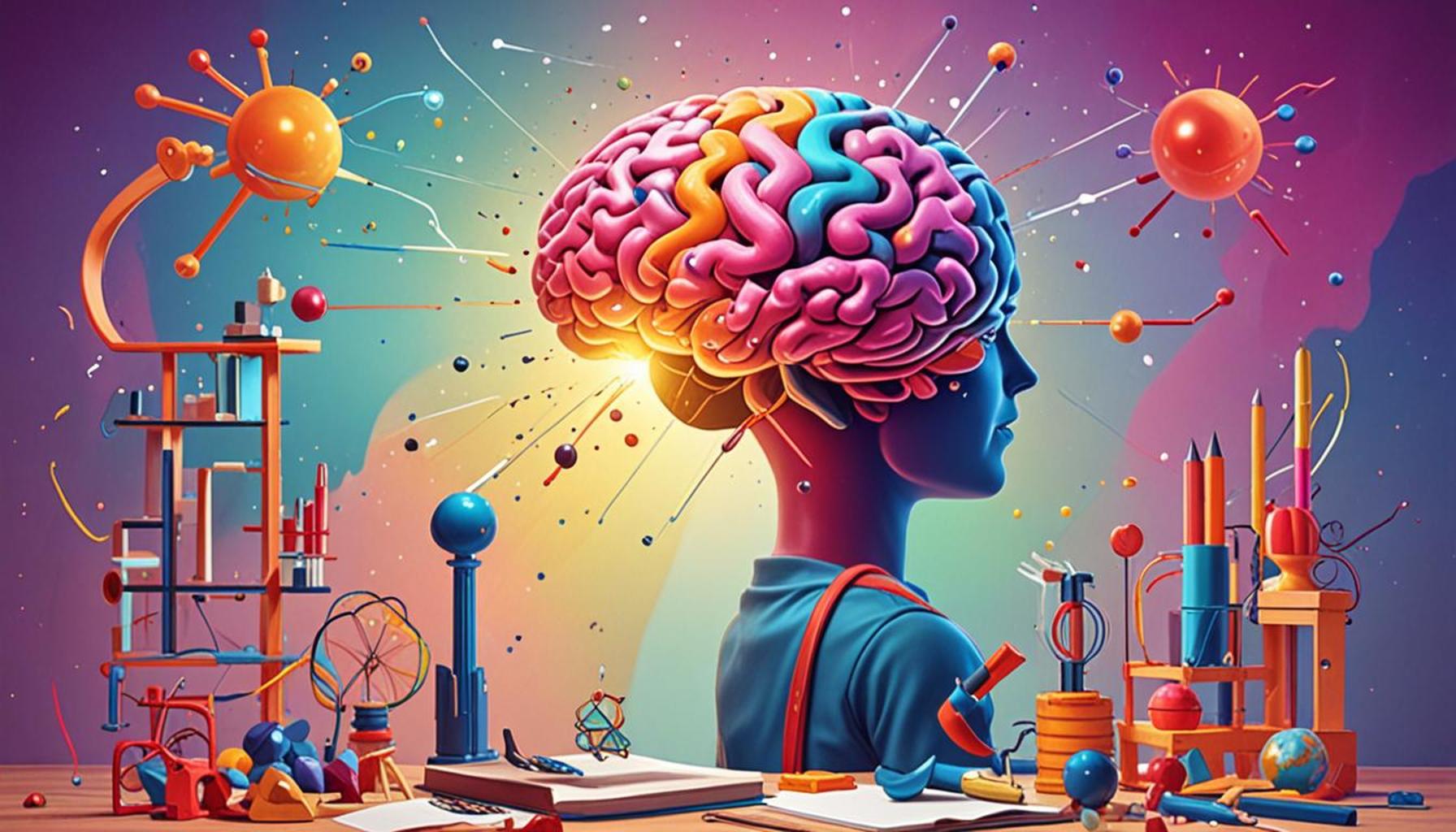
The Evolution of Logical Challenges: From Antiquity to the Digital Age

A Historical Perspective on Logical Challenges
The evolution of logical challenges captures the essence of human intellectual pursuit. From the foundational inquiries posed by early philosophers to the complexities of contemporary computational puzzles, this journey illustrates how our understanding of logic has transformed over time. Each era has introduced unique dilemmas that reflect its social, cultural, and technological context.
Philosophical Inquiry
The quest for knowledge began with thinkers like Aristotle, who used logical syllogisms to examine life’s fundamental truths. Aristotle’s works, including “Nicomachean Ethics,” laid the groundwork for examining morality and virtue through logical reasoning. For instance, the classic syllogism structure of “All humans are mortal. Socrates is a human. Therefore, Socrates is mortal,” is still a tool used in both education and debate to demonstrate logical frameworks.
Moral Dilemmas
Moral dilemmas also play a crucial role in logical challenges. Consider the well-known Trolley Problem, where one must choose between pulling a lever to divert a runaway trolley onto a track where it will kill one person instead of five. This scenario invites rich discussions on utilitarianism versus deontological ethics and illustrates how logic intertwines with moral philosophy to probe the depths of human values.
Mathematical Riddles
With the advancement of mathematics, complex puzzles emerged that demanded rigorous logical reasoning. Problems such as the famous Four Color Theorem illustrate the application of logic in understanding spatial relationships. This theorem posits that any map can be colored using just four colors without neighboring regions sharing the same color. The comprehension and solution of such problems propel modern mathematical inquiry and foster creative solutions across various industries.
Modern Logical Challenges
In the digital age, logical challenges have transformed dramatically, becoming more interactive and expansive. Websites and platforms like Chess.com and Lumosity offer dynamic puzzles that not only entertain but also stimulate cognitive function. These platforms cater to users of all ages, inviting them to enhance their problem-solving skills in a fun and engaging manner.
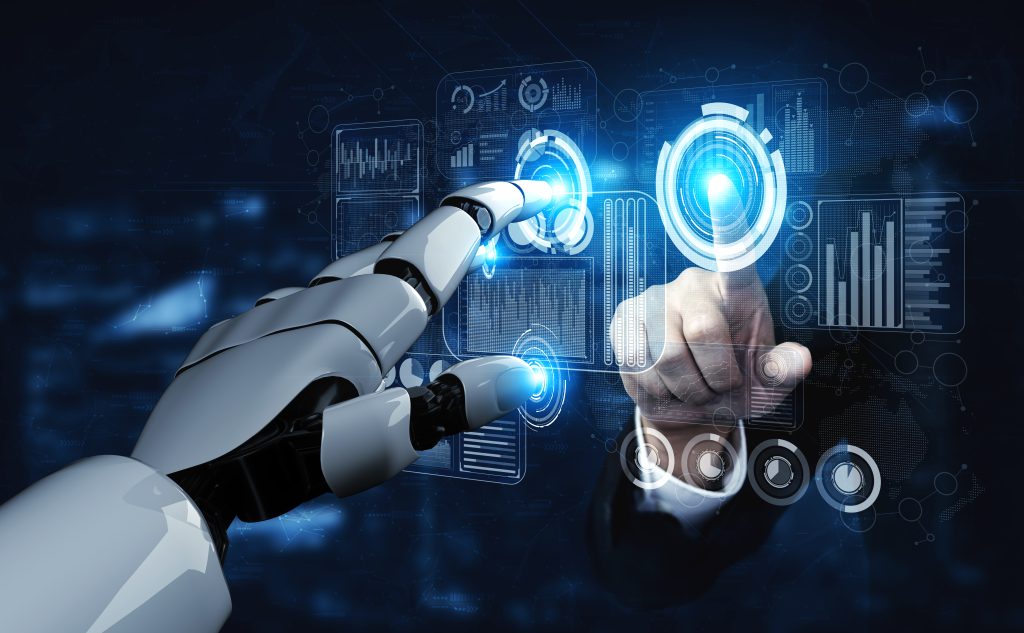
Moreover, the rise of Artificial Intelligence has ushered in a new frontier of logic. AI programs are increasingly capable of creating and solving complex logical problems, bridging the gap between human reasoning and machine learning. For instance, AI can analyze vast datasets to uncover patterns, making logical deductions at speeds that surpass human capability.
Additionally, the tech landscape has given birth to platforms like HackerRank and LeetCode, where aspiring and seasoned developers engage with coding challenges that simulate real-world scenarios. These platforms not only prepare developers for interviews but also serve as a practical training ground for mastering logical and analytical skills relevant to programming.
Conclusion
The exploration of logical challenges, both past and present, enriches our understanding of reason and critical thinking. By examining how these challenges have adapted to technological advancements and cultural shifts, we gain valuable insights into the foundations of logical reasoning. As we continue to engage with these problems, we not only foster our intellectual growth but also embrace the innovative potential of future challenges. Through this journey, it becomes clear that the realm of logic is as dynamic as the society from which it emerges, inviting us to delve deeper into its fascinating evolution.
EXPLORE MORE: Click here to enhance your critical thinking skills
The Journey of Logical Challenges Through Time
The history of logical challenges serves as a fascinating timeline, showcasing humanity’s quest to comprehend and unravel the complexities of thought and reasoning. As we trace the development of logic from ancient civilizations to the present day, we uncover a spectrum of dilemmas that have increasingly shaped our understanding of reality. This evolution illustrates how logical challenges have been intricately linked to the cultural and technological advancements of each epoch, urging both intellectual curiosity and critical thinking.
Early Stringent Reasoning in Ancient Cultures
Logical challenges have been a part of human discourse for millennia. In ancient societies such as those of the Greeks and Chinese, philosophical inquiries laid the groundwork for systematic reasoning. For instance, the early Greeks examined paradoxes and logical constructs through the works of philosophers like Zeno. His famous paradoxes, such as “Achilles and the Tortoise,” challenged the conventional understanding of motion and division, prompting thinkers to grapple with notions of infinity and continuity. Zeno’s arguments stimulated critical discussions that reached beyond mere academia, influencing mathematics and physics for centuries.
The Role of Logic in Science and Mathematics
The Renaissance marked a pivotal moment for logical challenges, spurred by the resurgence of interest in science and mathematics. Thinkers such as Descartes and Leibniz pioneered methods of formal logic that would lay the foundation for modern mathematical reasoning. The introduction of symbolic logic allowed mathematicians to express complex problems in more succinct ways, fueling advances in fields such as algebra and geometry. The logical exploration not only spurred scientific discovery but also created a domino effect, leading to innovations in technology and engineering.
Logical Paradoxes and Their Influence
As the field of logic matured, it also began to embrace complexities in reasoning that brought about thought-provoking paradoxes. Examples include:
- Russell’s Paradox – This paradox questions the existence of a set that contains all sets that do not include themselves, leading to fundamental questions about set theory.
- The Barber Paradox – A scenario where a barber shaves all those who do not shave themselves, leading to a question of whether the barber shaves himself.
- The Liar Paradox – A statement that declares itself to be false, inciting discussions on truth and self-reference.
These paradoxes not only highlighted the limitations of formal logic but also catalyzed further inquiry into the nature of truth and reasoning itself. Scholars and logicians began reconsidering definitions and frameworks, paving the way for the development of more robust logical systems.
The Expansion of Logic in the Information Age
With the advent of computers in the 20th century, the landscape of logical challenges transformed yet again. Logic became essential to programming, algorithms, and data processing. The rise of the internet democratized access to logical puzzles and challenges, enabling a global population to engage in collective problem-solving. Websites dedicated to logic puzzles, such as Brilliant and game-based platforms like Prodigy, not only entertain but also cultivate a generation of engaged thinkers adept at tackling modern-day challenges.
As we delve deeper into the evolution of logical challenges, it becomes clear that these inquiries are not merely academic. They are a reflection of the values and aspirations of societies throughout history, offering insights into our collective quest for understanding. Each era’s approach to logical reasoning reveals changing perspectives that encourage an ongoing dialogue between past philosophical thought and present-day innovations.
The Transition from Classical Logic to Computational Reasoning
As we delve deeper into the evolution of logical challenges, it’s essential to recognize how the foundations laid in antiquity have transitioned into the contemporary landscape of digital reasoning. In ancient Greece, logic was systematized by philosophers like Aristotle, who introduced syllogistic reasoning. This early form of logic created a framework for deductive reasoning that would influence thought for centuries. The shift came with the advent of computers, leading to new paradigms in logic that prioritize computational reasoning over traditional methods.While classical logic focuses on absolute truths and fallacies, modern logical challenges now encompass the complexities of computer sciences, including algorithms and artificial intelligence. The rise of computational logic, which concerns itself with the logical properties of algorithms, exemplifies this shift. Today’s digital age has witnessed intelligent systems that not only evaluate logical statements but also learn and adapt based on data inputs—an advancement that Aristotle could hardly envision. In this evolving context, logic is no longer confined to philosophical discourse but plays a critical role in fields such as programming, data analysis, and machine learning. As learners engage with these challenges, they discover innovative methods to solve problems, making the exploration of logical frameworks not just a theoretical exercise but an applied science. This intriguing interplay between ancient principles and modern practices invites further investigation into how these dynamics reshape our understanding of logic, reason, and decision-making in our daily lives.
| Category | Description |
|---|---|
| Classical Logic | Syllogism represented by figures of deductive reasoning, foundational in shaping logical discourse in antiquity. |
| Computational Logic | Algorithms translate logical frameworks into computational tasks, leading to breakthroughs in AI and machine learning. |
As users engage with puzzles and logical challenges today through digital mediums, they experience a rich tapestry of concepts bridging ancient wisdom and modern tech. This ongoing dialogue between eras not only stimulates intellectual curiosity but also poses new avenues for research in the philosophy of logic and technology. The vast potential for inquiry into this field cannot be overstated, as each new challenge contributes layers to an ever-evolving narrative of human thought.
DISCOVER MORE: Click here to delve deeper
The Intersection of Logic with Modern Technology
As we traverse through the 21st century, the relationship between logic and technology has become increasingly symbiotic. With advances in artificial intelligence and machine learning, logical challenges have not only amplified in complexity but also in their relevance to everyday life. Algorithms, fundamentally rooted in logic, drive everything from search engines to social media platforms, radically transforming how we live and interact.
Artificial Intelligence and Problem-Solving
The evolution of logical challenges has been particularly pronounced in the field of artificial intelligence. AI systems, designed to mimic human reasoning, rely heavily on formal logic to interpret data and make decisions. For instance, machines employ techniques like predicate logic and fuzzy logic to navigate ambiguous scenarios, enabling applications from self-driving cars to medical diagnosis systems. The intricate puzzles presented by complex data sets demand sophisticated logical frameworks, challenging both developers and researchers to push the boundaries of human-intelligence integration.
Educational Tools and Gamification
Moreover, the digital age has ushered in a new era of learning through gamification, where logical challenges are embedded in interactive experiences. Educational platforms like Khan Academy and Code.org utilize logic puzzles to enhance cognitive skills in students. Games like Portal and The Witness present players with logical conundrums that require innovative thinking and problem-solving strategies. These developments not only make the learning process more engaging but also cultivate critical thinking and analytical skills from a young age. This reflects a cultural shift toward recognizing the vitality of logic in educational curricula.
Social Media and Logic in Communication
In the realm of social media, logical challenges play a crucial role in how information is validated and disseminated. In an age where misinformation spreads rapidly, logical reasoning becomes a vital tool for users to evaluate the credibility of claims. Users are prompted to apply deductive reasoning and assess the logical consistency of posts, which cultivates a more informed public. As a result, critical thinking has never been more necessary, as people take on the challenge of sifting through vast quantities of information to discern truth from falsehood.
The Future of Logical Challenges
Looking forward, the landscape of logical challenges will likely continue to evolve alongside emerging technologies like quantum computing and blockchain. Quantum computing promises to revolutionize our understanding of logic and problem-solving, offering unprecedented processing power to tackle complex logical problems that were previously deemed unsolvable. As such, we stand on the cusp of a new frontier where the very foundations of logical reasoning may be redefined by technological advancements.
This continuous interaction between logic and technology highlights the fundamental nature of logical challenges in shaping our understanding of complex systems, environments, and interactions. Logical reasoning is not merely an academic discipline; it is essential for navigating the intricacies of modern life in an increasingly interconnected world.
DIVE DEEPER: Click here to discover more
Conclusion: The Continuing Journey of Logic Through Time
In summary, the evolution of logical challenges from antiquity to the digital age serves as a fascinating chronicle of human thought and innovation. What began as philosophical inquiries into the nature of reasoning and argumentation has transformed into complex algorithms and cognitive puzzles that underlie modern technology. The interplay between logic and artificial intelligence stands testament to the necessity of rigorous reasoning in an era where machines are being designed to replicate human cognitive processes. As we harness these advancements, it becomes clear that these challenges not only push the boundaries of technology but also fortify essential skill sets in our society.
Furthermore, the incorporation of logical challenges into educational frameworks through gamification highlights a vital cultural shift, where problem-solving and critical thinking now emerge as cornerstones of learning. As students engage with interactive tools, they equip themselves with the analytical prowess needed to navigate complex information landscapes—especially critical in an age where misinformation can distort public discourse.
Looking ahead, the future of logical challenges appears boundless with the potential of quantum computing and emerging technologies. As we stand at the precipice of new discoveries, the foundations of logic may be reimagined in ways that could revolutionize problem-solving across various domains.
Ultimately, logical reasoning remains an indispensable tool for understanding our world and addressing the complexities it presents. By continuing to celebrate and explore the evolution of logical challenges, we not only prepare ourselves for the uncertainties of the future but also deepen our appreciation for the rich history that has shaped our cognitive journeys.