The Science of Brain Teasers: Understanding How the Brain Works During Puzzle Solving
The Cognitive Power of Puzzles
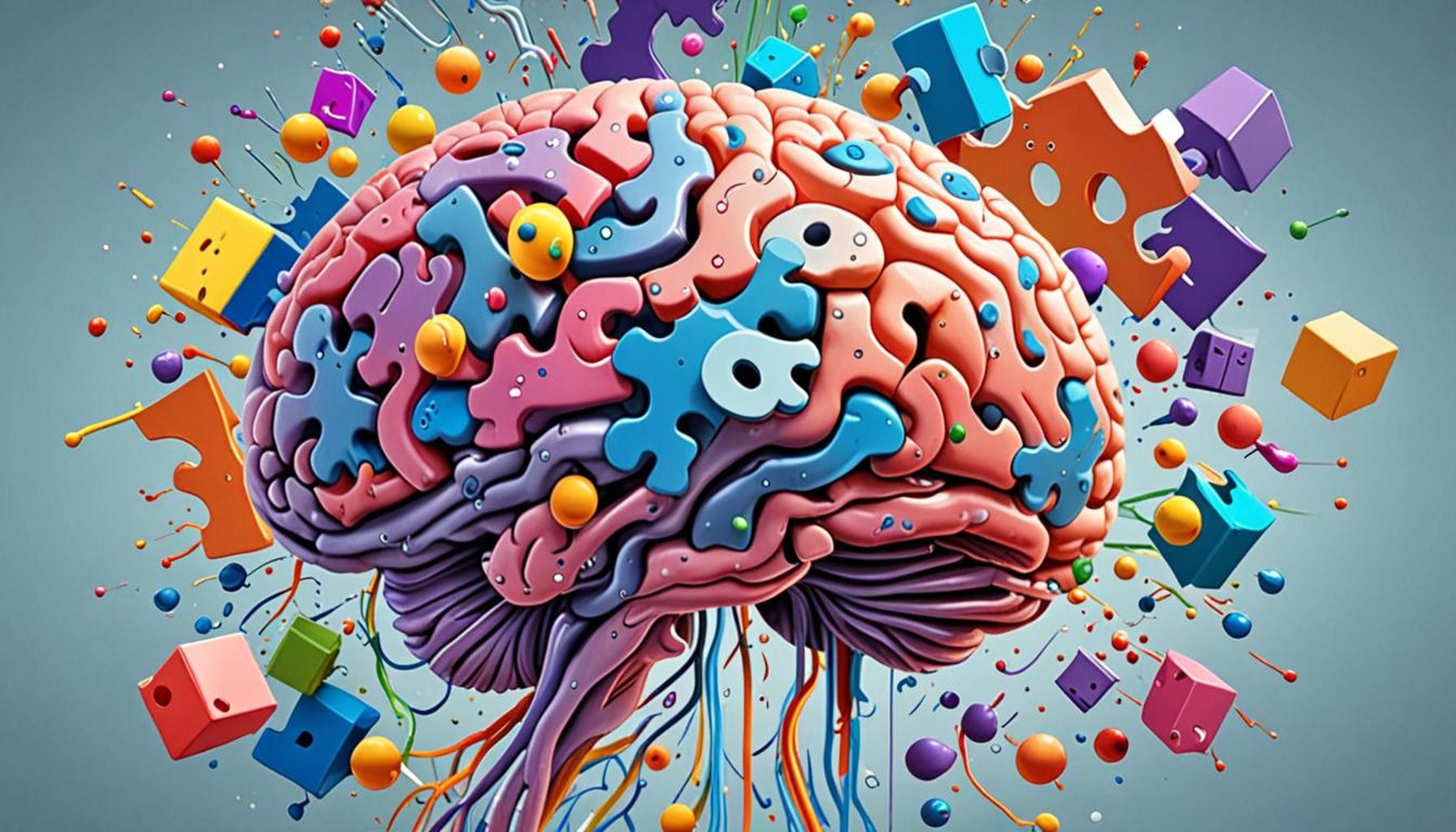
Every time you tackle a brain teaser, you engage in a fascinating dance with your brain’s cognitive functions. As you explore these mental challenges, your brain processes complex information while navigating intricate pathways that unveil its remarkable abilities. So, how do these puzzles reveal the intricacies of our mental workings? The allure of brain teasers lies not only in their fun and engaging nature but also in their capacity to enhance our cognitive skills substantially.
Consider the following aspects of brain teasers:
- Problem-Solving Skills: Engaging with puzzles activates critical thinking and challenges you to devise solutions systematically. For example, whether you are piecing together a jigsaw puzzle or solving a Sudoku, your approach to uncovering the solution sharpens your analytical capabilities.
- Memory Utilization: Remembering rules, strategies, and even previous puzzle solutions can enhance recall. This practice fortifies your working memory, allowing you to better retain and retrieve information when needed. Think of crossword puzzles that require you to remember everything from vocabulary to trivia—a potent memory workout.
- Creativity Boost: Thinking outside the box is essential for unconventional solutions. Many brain teasers, like lateral thinking puzzles, demand that you stretch your imagination. When someone asks, “How can a man fall off a 50-foot ladder and not get hurt?” the answer often requires creative thinking that challenges conventional logic.
Research indicates that solving puzzles stimulates numerous brain regions, including those responsible for attention, language, and memory. When you tackle a riddle, for instance, your brain decodes language while simultaneously analyzing its logical structure, leading to dual engagement that fortifies neurological connections and enhances overall cognitive function.
Furthermore, puzzles are not merely recreational; they contribute to long-term mental health. Regularly engaging in brain teasers has been associated with several benefits:
- Reduced risk of cognitive decline in older adults. Studies suggest that mentally stimulating activities can delay the onset of dementia and other degenerative brain conditions.
- Enhanced focus and concentration in daily tasks. By training your brain to solve complex problems, you build a foundation for improved attention span and focus, characteristics beneficial in both professional and personal contexts.
- Increased resilience in problem-solving across various scenarios. The skills developed through puzzle-solving translate into improved decision-making abilities in everyday life.
As we delve deeper into the world of brain teasers, it becomes increasingly evident that these seemingly simple challenges hold profound implications for understanding how our brains operate. Not only do they entertain, but they also foster an environment where cognitive capabilities are transformed and enhanced. Engaging in these mental workouts can pave the way for a more agile and resilient mind. So next time you pick up a puzzle, remember that you are not just having fun; you are actively contributing to your mental fitness and unveiling the mysteries of your brain.

DIVE DEEPER: Click here to discover the connection between logic puzzles and creativity
The Mechanics Behind Puzzle Solving
To further appreciate the impact of brain teasers on cognitive function, it is vital to understand the underlying mechanics that come into play during the problem-solving process. When you encounter a puzzle, your brain undergoes a series of complex interactions that involve various regions, each contributing uniquely to the experience of unraveling the challenge.
At the core of this process is the prefrontal cortex, the brain’s command center for decision-making and problem-solving. This area activates when you analyze the components of a puzzle, strategize potential solutions, and make judgments about the information presented. For instance, while solving a logic problem, the prefrontal cortex works hard to evaluate possibilities before arriving at the correct answer.
The role of the hippocampus is also crucial. This brain structure plays a significant role in forming new memories and navigating complex situations. When you face a brain teaser, your hippocampus aids in recalling previously learned information, such as patterns, methods, and strategies. This reliance on memory becomes essential, especially in puzzles that involve intricate logic or numerical sequences, such as Sudoku—a classic example pursued avidly in the United States. As you draw upon your prior experiences with similar puzzles, you enhance your problem-solving efficiency and overall cognitive agility.
The Role of Neurotransmitters
Another fascinating aspect of puzzle-solving involves neurotransmitters. These chemical messengers facilitate communication between neurons and influence various cognitive processes, such as attention and motivation. When engaged in a challenging brain teaser, levels of dopamine are often elevated. This particular neurotransmitter is known for promoting reward and pleasure, which explains the satisfying feeling of cracking a tough riddle or completing a challenging crossword. This rewarding sensation not only enhances enjoyment but also reinforces the neural pathways involved in problem-solving, making it more likely that individuals will engage in such activities again.
One cannot ignore the significance of emotional engagement during puzzle-solving. Neurological studies have shown that positive emotions can enhance cognitive function. When you’re excited or intrigued by a brain teaser, your brain’s performance improves, leading to increased creativity and better outcomes in problem-solving. This emotional component is why so many people find puzzle-solving not only enjoyable but also an exhilarating way to spend their time.
In summary, brain teasers serve as a window into the mind, revealing how various brain regions coordinate to tackle complex challenges. Through the intricate interplay of the prefrontal cortex, hippocampus, neurotransmitters, and emotional responses, we can appreciate just how deeply these puzzles contribute to the enhancement of cognitive capabilities. As we continue to explore the interconnected relationships in our brain during these exercises, we unveil layers of our mental processes that encourage growth, adaptability, and resilience. Thus, engaging with brain teasers does more than entertain; it actively shapes our cognitive landscape, making it essential to integrate such mental challenges into our regular routines.
The Mechanics of Problem-Solving in the Brain
When individuals engage in solving brain teasers, a complex interplay of cognitive functions is activated, revealing the intricate workings of the human brain. The prefrontal cortex, often dubbed the ‘executive center’, plays a pivotal role by managing decision-making and problem-solving processes. This region is responsible for analyzing clues and formulating strategies, thereby laying the groundwork for effective puzzle resolution. Interestingly, the brain also relies heavily on memory systems to retrieve past experiences related to puzzle-solving. Specifically, the hippocampus stores information that can aid in recognizing patterns or recalling successful methods from previous challenges. This interaction between memory and reasoning amplifies the effectiveness of our cognitive capabilities, allowing for enhanced performance in tasks requiring logical thinking.Another significant aspect is the role of neurotransmitters, especially dopamine, which not only affects motivation but also enhances learning during the solving process. As individuals experience the satisfaction of cracking a tough brain teaser, dopamine is released, reinforcing the behavior. This biochemical feedback loop facilitates an eagerness to tackle even more challenging puzzles and thus sharpens intellect over time.Understanding these mechanisms encourages a deeper appreciation for the cognitive benefits of engaging in brain teasers. Not only do they serve as entertaining diversions, but they also promote mental agility and can be instrumental in improving problem-solving skills applicable in everyday life.
| Category 1 | Category 2 |
|---|---|
| Cognitive Engagement | Enhances critical thinking and analytical skills. |
| Memory Recall | Utilizes past experiences to identify patterns in challenges. |
Exploring the relationship between brain teasers and cognitive function provides invaluable insights not just for personal growth but also for educational strategies aimed at fostering intellectual development. Engaging in such activities could pave the way for innovative thinking and problem-solving prowess, ultimately equipping individuals with skills that extend beyond puzzles.
DISCOVER MORE: Click here to learn about the impact of brain teasers on cognitive growth
The Cognitive Benefits of Engaging with Brain Teasers
The allure of brain teasers reaches far beyond amusement; they offer profound cognitive benefits that have been documented by researchers. Engaging with brain teasers not only exercises our minds but also fosters enhanced neural connectivity and cognitive flexibility. Recent studies suggest that regular participation in such mental challenges contributes to both short-term and long-term cognitive development, underscoring the value of integrating these puzzles into daily routines.
One of the critical areas where brain teasers have demonstrated their efficacy is in improving problem-solving skills. Individuals who regularly engage with puzzles, be they riddles, crosswords, or mathematical enigmas, have shown marked improvements in their approach to complex problems. This is largely attributed to the brain’s ability to adapt, commonly referred to as neuroplasticity. The more you challenge your brain, the more capable it becomes of forming new connections, enabling quicker and more efficient processing of information.
Moreover, brain teasers serve as a protective factor against cognitive decline. Research published in leading neurology journals indicates that older adults who regularly partake in mentally stimulating activities, including puzzles, have a reduced risk of developing dementia and Alzheimer’s disease. For example, a comprehensive study from the Rush Memory and Aging Project found that participants who engaged in brain-teasing activities like word games exhibited a slower cognitive decline compared to their less active counterparts. This finding emphasizes the critical role that mental engagement plays in sustaining cognitive health throughout aging.
Enhancing Critical Thinking and Creativity
In addition to refining problem-solving capabilities, brain teasers also have a profound effect on critical thinking and creativity. As we tackle puzzles, we are often required to think outside the box, explore unconventional solutions, and approach problems from multiple angles. This multifaceted approach stimulates the default mode network—a network of brain regions associated with creative thinking and imagination. Engaging in brain teasers fosters a habit of creative thinking that can be translated into various aspects of life, from artistic endeavors to professional projects.
Consider the wide appeal of games like Rubik’s Cube or the popular mobile app 2048. These activities not only serve to entertain but also challenge users to devise strategies that require analytical and spatial reasoning skills. As players navigate these challenges, they engage in a mental dance involving foresight, pattern recognition, and revision of tactics—all within the framework of enjoyment.
Furthermore, group puzzles such as escape rooms have ushered in a new social dimension to brain teasers. These collaboratively driven activities not only enhance interpersonal skills through communication and teamwork but also amplify the cognitive benefits associated with brain teasers. The collaborative process allows participants to exchange ideas, challenge one another, and refine their solutions collectively, fostering an enriching environment for cognitive growth.
Overall, the compelling intersection of cognitive benefits, creativity, and social engagement reveals the importance of brain teasers in both individual and communal contexts. By continually pushing the boundaries of our mental capacities, brain teasers not only entertain but fundamentally reshape our cognitive and social experiences. As such, they should not merely be perceived as leisure activities but rather as crucial exercises in sustaining and enhancing our cognitive vitality.
LEARN MORE: Click here to discover the impact of mind games on cognitive development
Conclusion: The Vital Role of Brain Teasers in Cognitive Well-Being
In summary, the science of brain teasers unveils a fascinating interplay between cognitive enhancement and mental agility. Through regular engagement with various puzzles—whether they take the form of riddles, logic games, or collaborative challenges—individuals not only refine their problem-solving skills but also bolster their critical thinking and creativity. As research attests, these mental workouts promote neuroplasticity, allowing the brain to form new connections and adapt to ever-evolving challenges, a crucial factor in maintaining cognitive health.
Moreover, the social dynamics introduced by group activities, such as escape rooms or trivia nights, add another layer of engagement, illustrating the communal aspects of puzzle-solving. These experiences not only enhance interpersonal skills but also create a supportive atmosphere where ideas flourish, further enriching the cognitive benefits derived from these activities.
As individuals seek ways to engage their minds in today’s fast-paced world, incorporating brain teasers into daily life emerges as a valuable strategy for sustaining cognitive vitality. By viewing puzzles not just as fleeting amusements but as integral components of mental fitness, we position ourselves to unlock our full cognitive potential. Therefore, the next time you reach for a crossword or challenge a friend to a brain teaser, remember that you are not just seeking entertainment—you’re actively reshaping your brain’s resilience and capacity for growth.