D
Open terrain
Places without walls still need structure. Trees, water and height decide where figures can stand, what they can see and which route is quickest.
These nine guides show how to give open ground clear edges and clear choices without losing the look of a natural place.
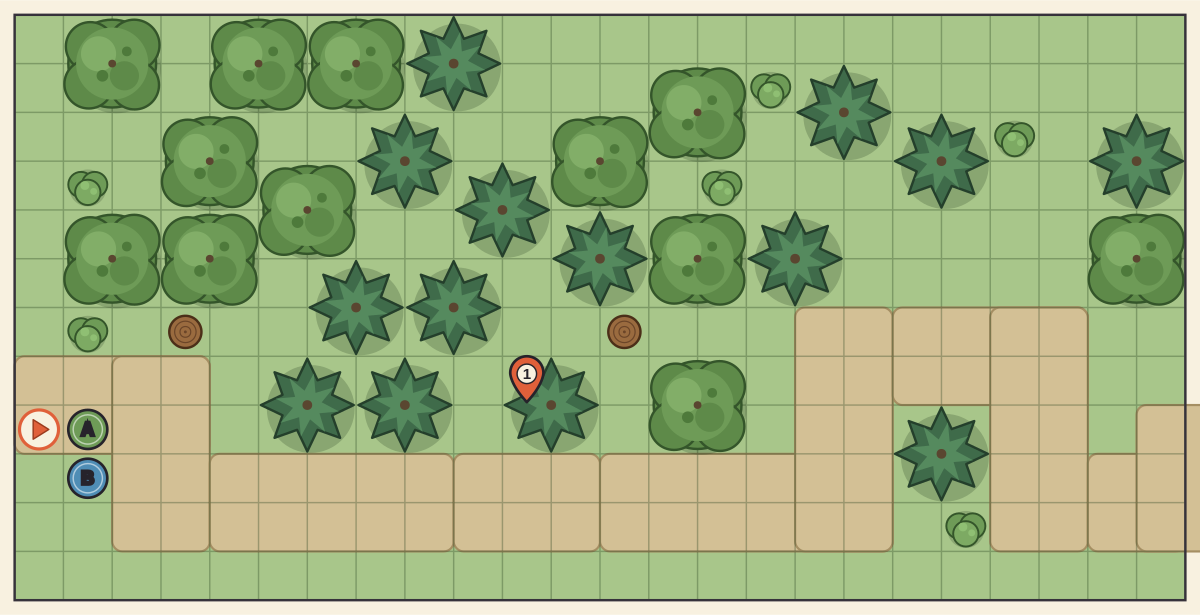 D1Forest map design that stays playablePlan clearings, trails and tree density first, then add trunks, so your forest map leaves room to move and gives players sight lines to use.
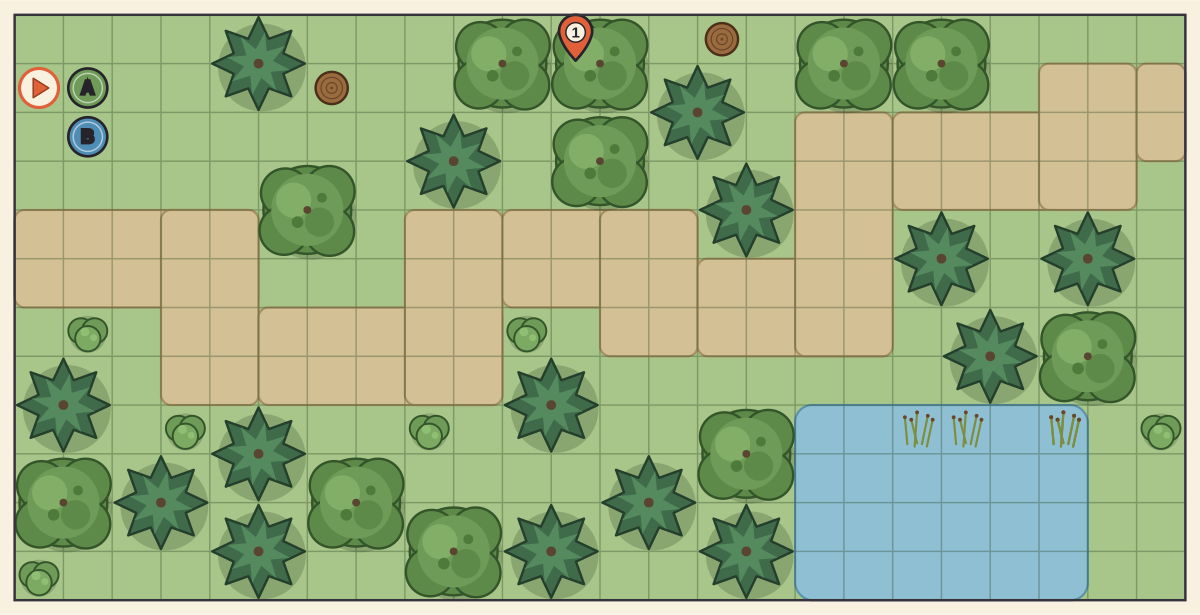 D2Drawing trees from above on RPG mapsLearn canopy sizes in squares, overlap, trunk marks and variety, plus how trees give cover on a grid, so top-down trees read clearly at the table.
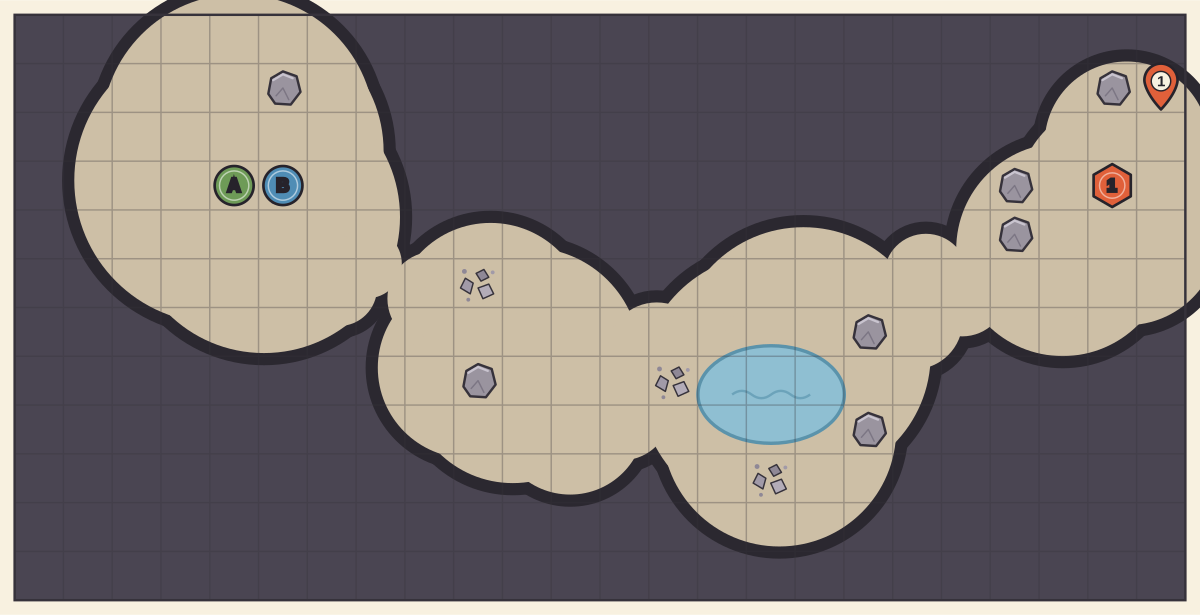 D3Cave map design without the maze of blobsDraw cave passages, chambers, ceilings and water on a square grid so the map feels natural, stays readable and avoids a pile of shapeless bubbles.
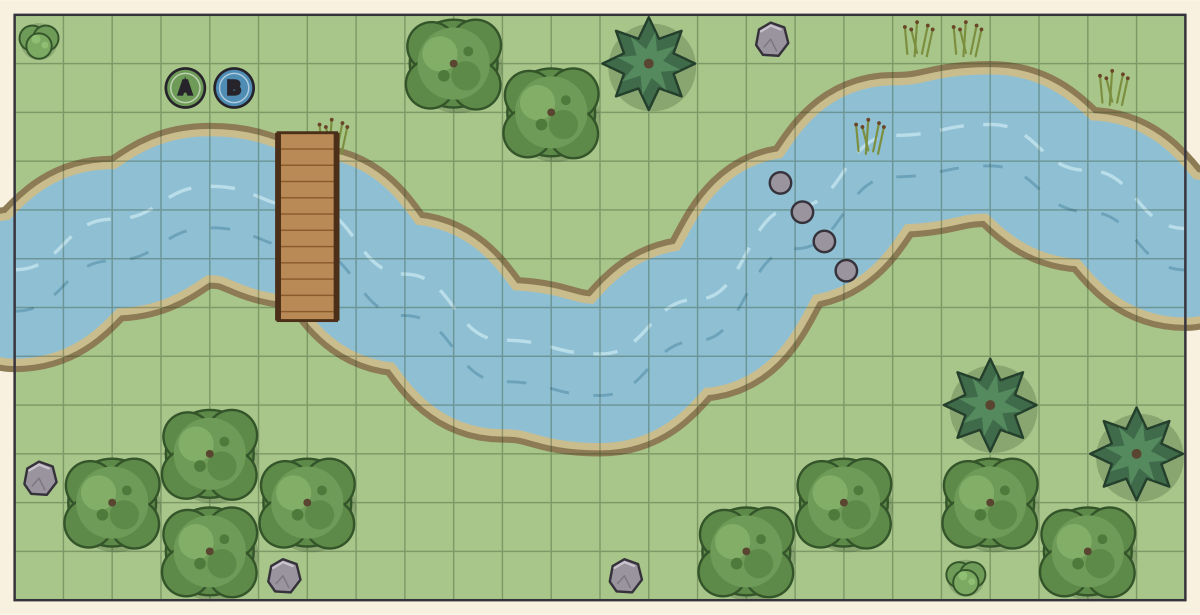 D4River map design: bends, banks and shallowsDraw rivers with believable bends, widths in squares, banks and shallows, and use the water to split a scene into two sides with real choices.
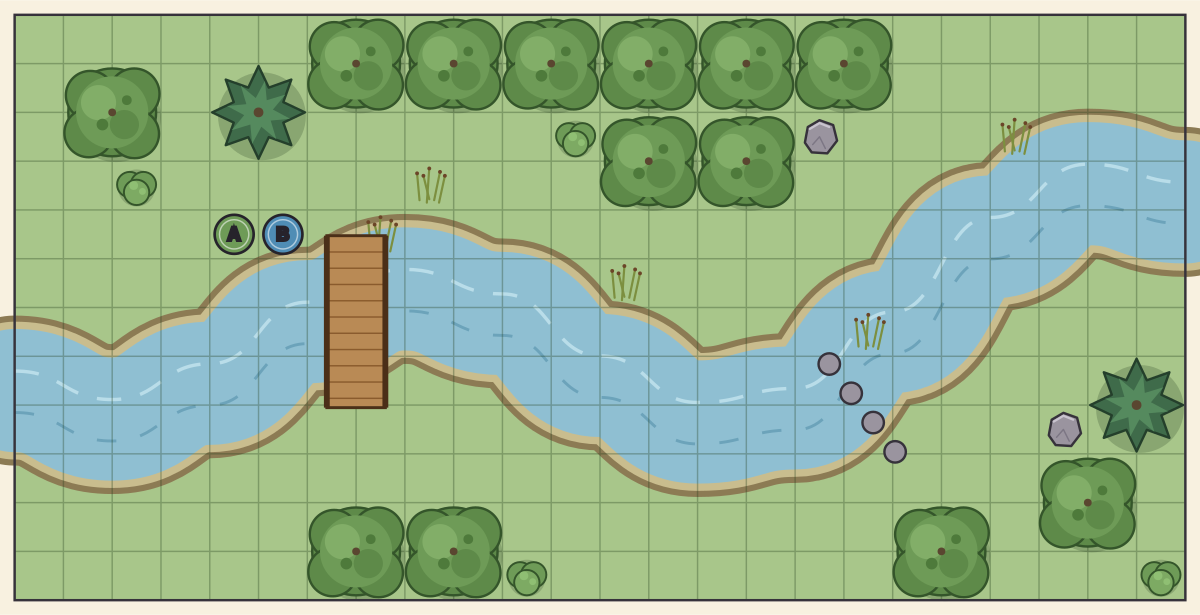 D5Bridges and fords as scene locationsDesign bridges, fords and stepping-stone crossings with widths in squares, approaches and cover, so a river crossing becomes a scene on its own.
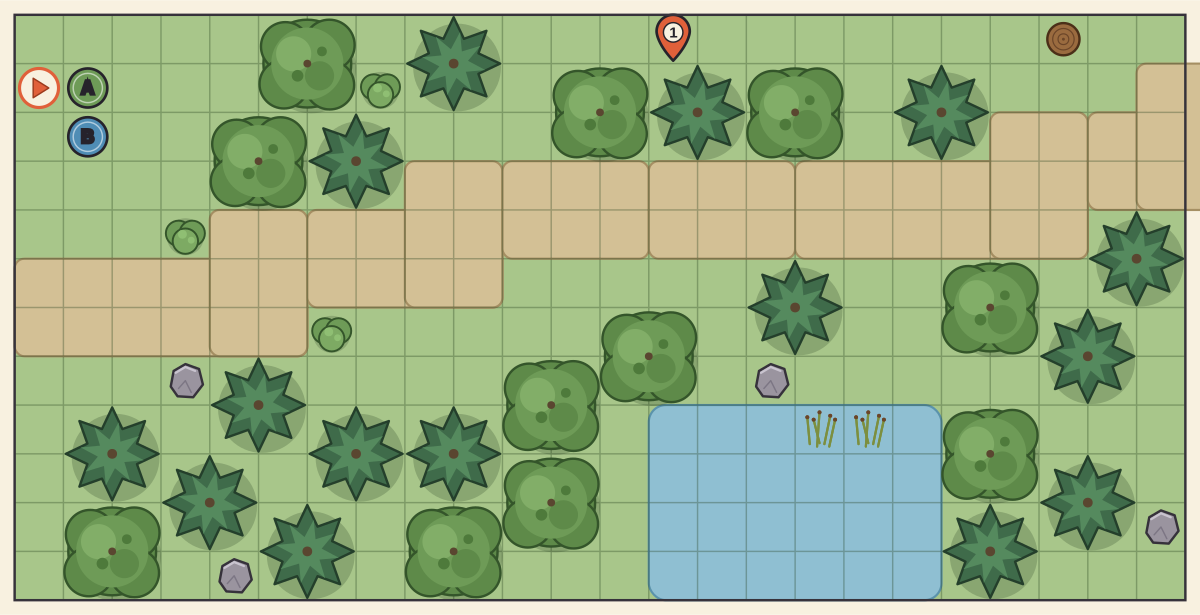 D6Trails and roads on wilderness mapsDraw trails and roads with widths in squares, natural bends and readable junctions, and use paths to steer travel across a wilderness map.
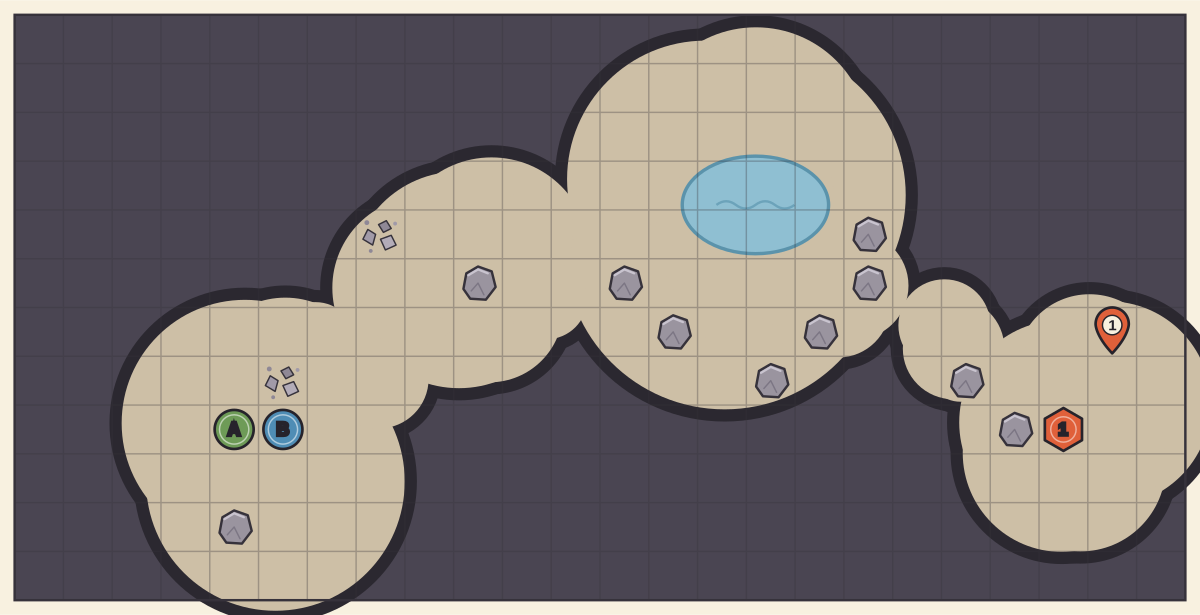 D7Show hills and cliffs on a grid mapChoose one clear convention for height on a square grid, with height numbers, tone bands, cliff edges and slopes that every player can read.
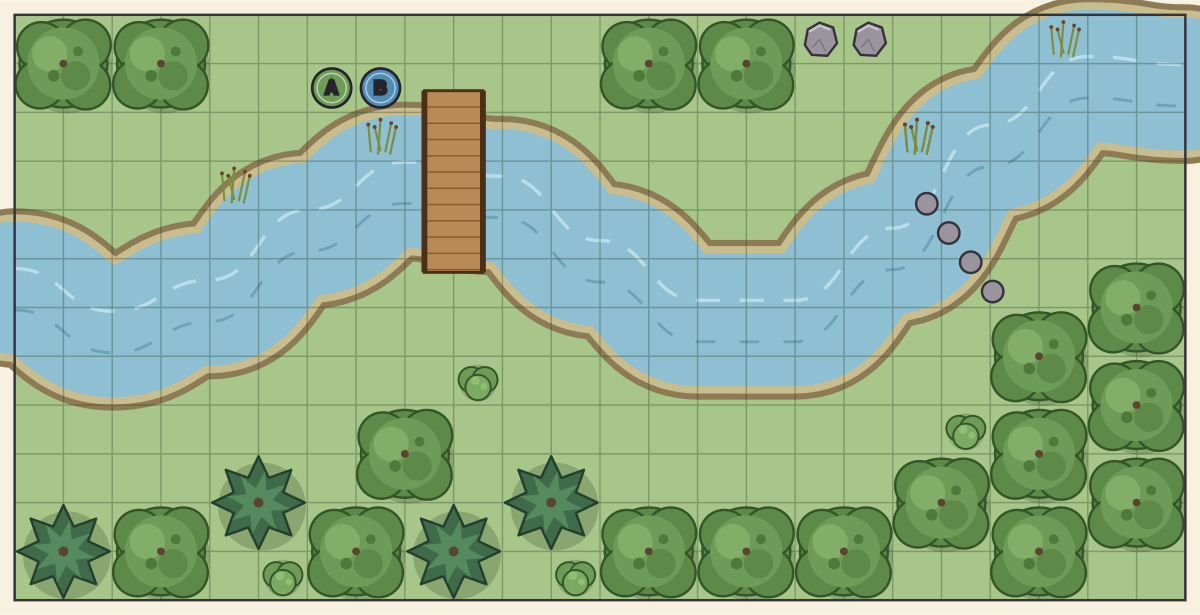 D8Swamp and lakeshore map designDraw soft edges, shallows, reeds and firm ground for marsh and shore maps, so players can read the footing in each square at a glance.
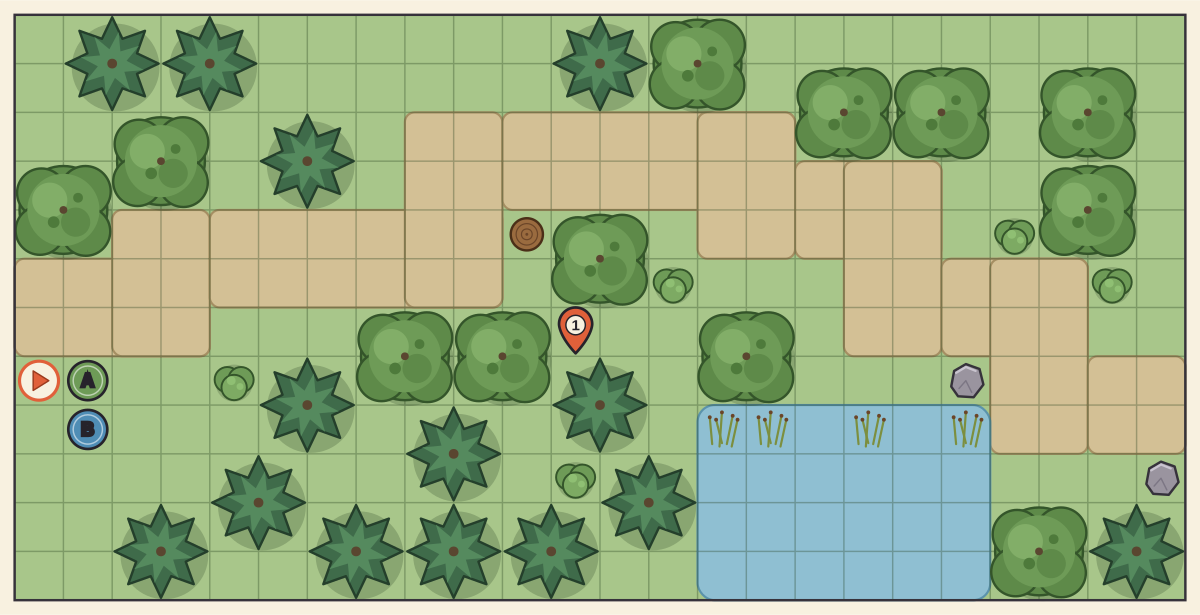 D9Campsite and clearing maps for small scenesLay out a camp or clearing with a fire, sleeping spots, cover and approach routes on a small grid, so a short outdoor scene plays clearly.